
It was a dark and rainy day in Chimacum. Most of the growers around here are hoping for a little bit of drier weather so we can get to prepping our soil beds and rows and get things growing. But it was a wet April last year and so far looks like we’re getting a wet one this year. Not complaining, you understand. But it does mean I’m fresh out of excuses for getting more content onto this barebones website. (These first words were drafted in April, I am finally returning to the draft to finish it up.)
Today is June 15th and once again it is a dark and rainy day in Chimacum. Lots of rain yesterday evening and overnight, more than 1″. We have had a week or two to play catch up from the extended wet and cool soils, and got things done. Soil temps have only recently risen above 60 deg. They dropped to 59 overnight.
Overview
We’re farming on leased ground and have about 2 acres for the horses’ pen and pasture. Another 2 acres is where we work them. We have divided this area into 4 plots to facilitate planning and crop rotations. Last fall we planted the area to cover crops, mostly rye/vetch but also some barley/field pea. It grew great, earlier planted barley was winter killed by several days of near zero temps. We had to take the few breaks in the weather to get tillage done and the cover worked back into the soil.
We did get such a break about two months or so ago and again in early May and were able to use the tandem disc. However, efforts to return too soon with the cultimulcher tended to form clods so we had to wait.

Crops
We’re using plot #1 for general produce crops, plot #2 for flint corn and squash , plot #3 for chickpeas and dry beans. We space our rows about 42″‘ apart since we prefer to drive the horses on a 36″ evener, meaning the horses walk approximately 36″ apart, we give them that extra 6″ to help keep their big feet off the crops, especially while we’re learning how to drive the cultivator straight. Plot #1 will host a variety of crops including lettuce, spinach, tah tsoi, pak choi, garlic, onions, scallions, potatoes, carrots, beets, tomatoes, peppers, tomatillos, and cucumber. And flowers.

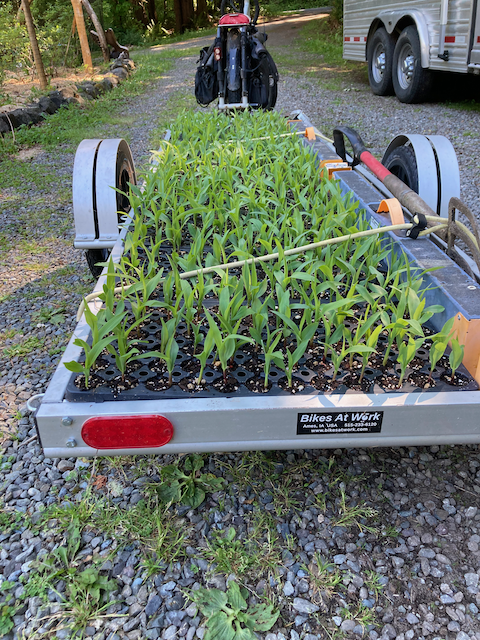
Plot #2 is planted to flint corn now. We spread manure on this piece May 16th and sowed about 2000 row ft of Deppe’s Ruby Gold from Adaptive Seeds on May 23rd. Soil temps reported from the nearby WSU Ag weather station were about 58/59. Then it started raining again and temps dropped. The corn was slow and irregular to germinate and emerge. But we had planted about 1,000 cells in trays at the home hoop house and finished transplanting all these in June 14 after weeding through much mustard. About 14 rows of corn plants 3″ tall spaced about every 12″. We had almost the perfect amount of transplants to fill the gaps in the rows.

At Plot #3 we decided we would learn how to use our walking plow. Went over to Around the Table Farm in Poulsbo to learn from Dana and Dandy (Thanks guys!). This was super helpful. Back at home Karen and I had a tough few hours the first day we went at it. The boys wanted to pull fast, the hitch length was a bit short and the plow was not getting deep enough. The horizontal hitch connection was a little off as the plow kept wanting to jump over into the furrow. So we messed around quite a bit that first afternoon. On the second day, after adding a 4″ link in the length and making a couple other minor adjustments we feel like we hit a groove, or I should say furrow. The biggest help was getting the horses to slow down, once we found “granny gear” the work seemed much more sustainable. We were able to plow 6-7″ deep and 16″ wide. The next day it poured rain and we didn’t go back to disc plot #3 for several weeks. After things dried up we spent another plow day day helping Laura at Chimalow Produce open up a new section for her operation at our neighbor’s property across the road from our home.

Plot #3 was planted to two varieties of garbanzo bean, both from Adaptive Seeds, sown 5/14, successfully emerged 5/30. Had been covered with row cover to help with flea beetle pressure but the wild mustard weed is now threatening to overwhelm the now 3-4″ tall plants. We also implanted a variety of dry beans but have seen spotty emergence. We’d hoped to reseed today but this will now have to wait a few days.
Plot #4 is an irregular pie-shaped piece that is about twice the size of the others. It was planted to rye vetch last fall and saw good growth before winter. We mowed it down with the sickle bar mower late April and left to dry, it rained. Had to remow with a rented brush hog and only recently have we had time to turn attention to discing the trashy organic matter in. We hope to sow buckwheat soon.
Summary heading into summer
Things are under control. Barely. We’re working 10-12 hour days x 7 per week. Especially since we started selling at the Chimacum Farmers Market on Sundays. We built a hefty hitching rail there that sits just behind the Chimacum Workhorse Project booth. So far we’ve only had lettuce, plant starts and kitchen herbs to sell. But the horses have gotten a lot of attention. Probably too much in fact, and we plan to restrict public access to their noses for petting. We are enjoying the experience so far and have trifold brochures to handout to help educate folks on the importance of supporting the local food system.
The sun is coming out now after the dark morning rain, so I’ll keep this brief. We’re hoping for a great summer here even as we know things will be too hot in many places where millions upon millions of people live. This next week is developing as a record breaking heat dome covering the entire eastern portion of the U.S.
Meanwhile, we will keep working to grow food and learning how best to apply our energies to the task.


